As the world looks to resolve complex, interconnected, and urgent challenges related to agriculture – such as food and nutrition security, climate change, biodiversity loss, and deforestation – the importance of scientific innovation has never been greater. The Technology Executive Committee of the UNFCCC indicates that technology, entrepreneurship, and innovation will play a vital role […]
The post The Accelerate for Impact Platform (A4IP): creativity, ingenuity and entrepreneurship for transformative solutions appeared first onCGIAR.
The post The Accelerate for Impact Platform (A4IP): creativity, ingenuity and entrepreneurship for transformative solutions appeared first on CGIAR.
]]>The Accelerate for Impact Platform (A4IP) is a venture space that builds on CGIAR’s legacy of research and innovation to support both incremental and transformational innovation to address some of the world’s most pressing challenges at the nexus of agriculture, environment, and health. A4IP bridges science and entrepreneurship to incubate and accelerate scientific innovations and generates both impact and the resources needed to support continued research in pursuit of the Sustainable Development Goals.
A4IP bridges science and entrepreneurship to incubate and accelerate scientific innovations
According to the Agfunder AgriFoodTech Investment Report, venture capital investment into agri-food technologies increased 85% in the year 2021 pouring a record $51.7 billion into innovative ag-tech and food-tech startups offering more profitable, accessible, efficient, safer, and greener solutions. Since 2015, global food companies have begun establishing venture funds and startup incubator programs, reflecting the shift away from traditional research and development models.
The Accelerate for Impact Platform (A4IP) keeps up to speed in this fast-evolving environment, rethinking business-as-usual and investigating models to capitalize on the emerging opportunities offered by the evolving funding landscape and the organization’s need to work more closely with the private sector.
A4IP is articulated around three pillars:
- Valorize dormant know-how by incubating and accelerating existing science-based innovations stuck in the precommercial phase, connecting them with the innovation ecosystem, and promoting an Open Innovation culture.
- Co-design and launch novel transformative innovations by de-risking pioneer market-driven research and funding visionary teams and their scientific creativity to find breakthrough solutions.
- Nurture and institutionalize an entrepreneurial mindset and market-oriented culture by offering training, mentoring opportunities, and digital hangouts while attracting the future generation of entrepreneurial scientists.
In November 2021, the first global Agrobiodiversity Innovation Challenge received almost 350 submissions, involving 1,050 startups from 76 countries. A total of 16 awards were granted to winning pitches, including enrollment in the CGIAR x Investor Readiness Program offered in partnership with Rockstart.
The Agri-Food Tech Innovation Forum, “The Role of Venture Capital in Agricultural and Food Systems: Creating Opportunities and Scaling Up Science-Based Innovations,” in November 2021 convened experts from Valoral Advisors, Deep Science Ventures, Food@Google, Seedstars, CiBO Technologies-Flagship Pioneering, the Italian Institute of Technology, Rockstart, Pluton Biosciences, Knorr at Unilever, USDA, IFAD, and the Bill & Melinda Gates Foundation to discuss models to bridge the gap for accelerating innovation and de-risking innovative research and scaling processes.
In Spring 2022, A4IP plans to launch the AgriTech4Morocco Innovation Challenge, aimed at improving the efficiency, competitiveness, and sustainability of the agriculture sector. The top 20 teams will be awarded with a three-day intensive bootcamp in Meknes, and finalists receive a tailored three-month acceleration program.
The A4IP scouts founders of innovative science-driven companies to present their scaling journey to CGIAR scientists and discuss avenues for collaboration during the Venture-Out Events series. The first event was inspired by A4IP’s collaboration with GoMicro, a phone-based detection app to assess grain quality in Africa by utilizing cost-effective mobile attachments and showcased the power of artificial intelligence products and services to provide solutions to farmers. A second iteration convened an all-CGIAR audience for a conversation about technological innovation for soil health with STENON, an innovative ag-tech startup that provides farmers with a technology solution for independent, real-time soil analysis.
A4IP also works to strengthen and institutionalize innovation activities at CGIAR. A4IP is now launching VentureSpace, a virtual innovation ecosystem for entrepreneurs, scientists, experts, investors to connect and collaborate with one another, and even participate in programming like capacity building courses and innovation challenges.
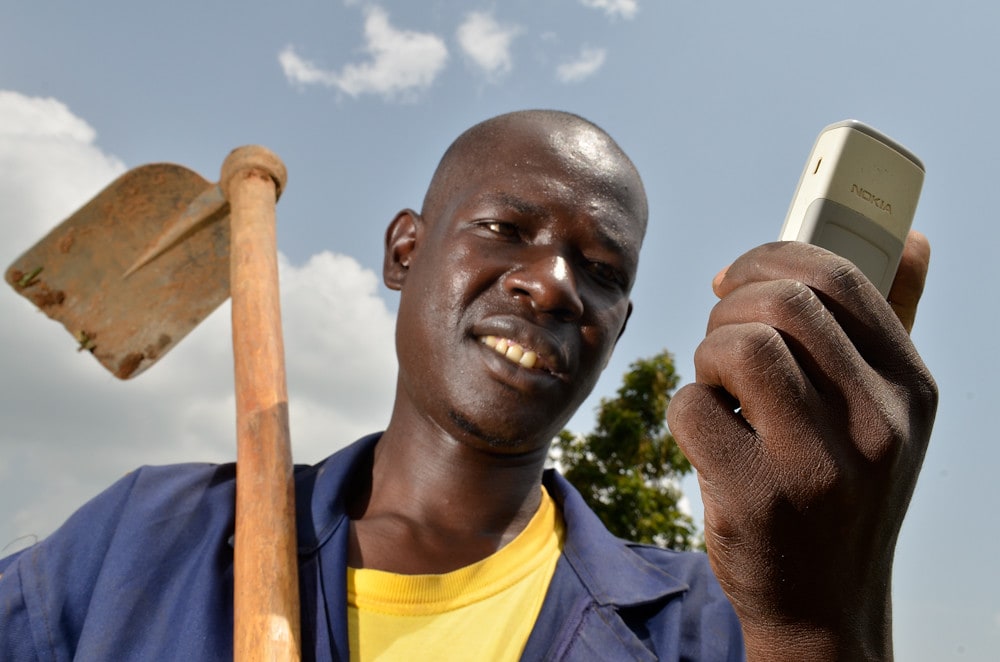
Header image: A maize farmer in Kisumu, Kenya, who has signed up to receive text messages from the CIAT-led Africa Soil Information Service (AfSIS). The messages provide vital information on crop management, including planting times and fertiliser application. Photo by N. Palmer/CIAT
The post The Accelerate for Impact Platform (A4IP): creativity, ingenuity and entrepreneurship for transformative solutions appeared first on CGIAR.
]]>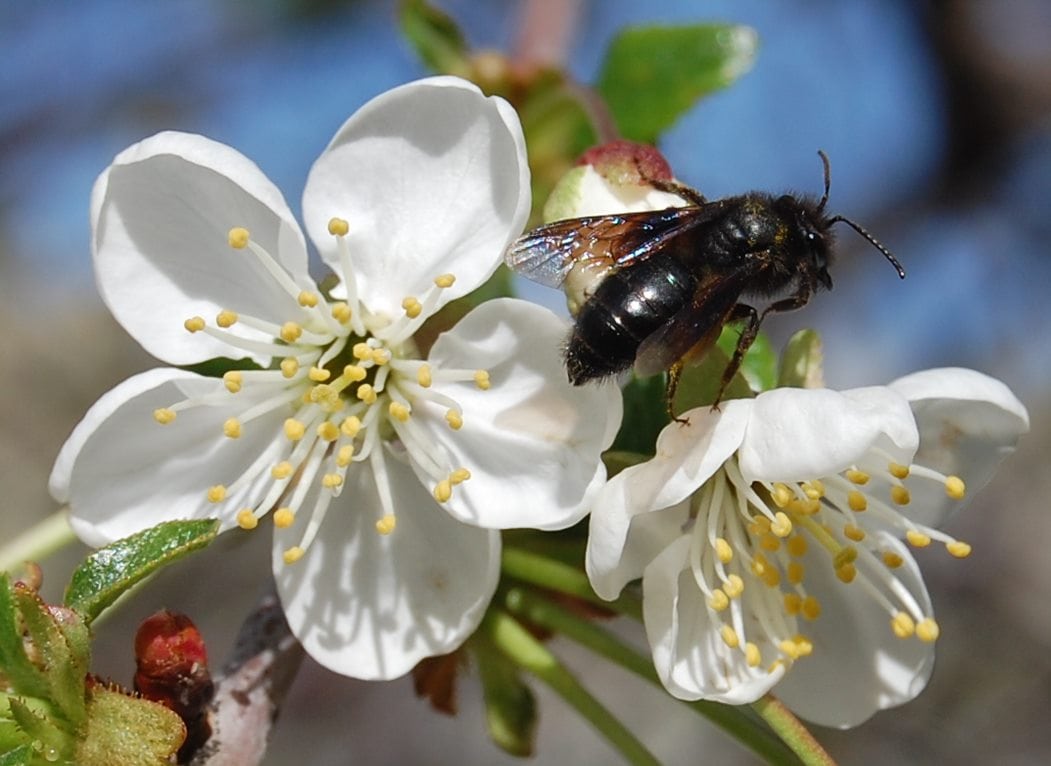
CGIAR researcher Stefanie Christmann at the International Center for Agricultural Research in the Dry Areas (ICARDA) has found an alternative way to support pollinators and their role in agriculture without depending on high public spending. The new approach, Farming with Alternative Pollinators (FAP), allows farmers to raise the diversity and abundance of wild pollinators while still generating income from their entire block of land.
The post A sustainable way to protect pollinators and raise farmer incomes appeared first onCGIAR.
The post A sustainable way to protect pollinators and raise farmer incomes appeared first on CGIAR.
]]>CGIAR researcher Stefanie Christmann at the International Center for Agricultural Research in the Dry Areas (ICARDA) has found an alternative way to support pollinators and their role in agriculture without depending on high public spending. The new approach, Farming with Alternative Pollinators (FAP), allows farmers to raise the diversity and abundance of wild pollinators while still generating income from their entire block of land.
Through this new approach, a farmer allots around 25% of a field as a ‘pollinator habitat enhancement zone’. Instead of wildflowers, which many farmers tend to view as weeds taking up valuable acreage, these zones are planted with marketable plants – such as oilseeds, spices, vegetables, or medicinal plants – that attract and support wild pollinators and natural enemies of crop pests. Nesting support for pollinators is also provided, using local or waste materials such as hollow stumps, packed bare soil, or old wood with boreholes.
Tests have shown that the approach clearly intensifies production through the improved contribution of two vital ecosystem services: pollination and pest control
If the farmer’s main crop is pollinator-dependent, the increased abundance and diversity of wild pollinators and natural enemies of pests will in turn improve the quality and yield of the main crop, and reduce the need for chemical pesticides. This means that farmers can spend less and earn more, while making the most of their fields by area.
Tests in different countries and settings have shown that the approach clearly intensifies production through the improved contribution of two vital ecosystem services: pollination and pest control. Results show an increase in agricultural production per surface of 100% or more, and a reduction in pest abundance by 50% or more. FAP is economically self-sustaining, as the incentive for farmers becomes higher income per surface area, rather than an external payment. This can support scalability in low- and middle-income countries.
Results show an increase in agricultural production per surface of 100% or more, and a reduction in pest abundance by 50% or more
However, farmer knowledge of the ecological and economic value of wild pollinators and natural enemies is also important. This can ensure that farmers protect nesting sites from deep tillage at critical times, or other destructive factors like chemical overuse. That is why the innovation package introduced by CGIAR scientists at ICARDA includes capacity-building components, such as videos, brochures, on-site training, and information and communication technology (ICT) support. The materials also cover important information about what kinds of marketable habitat enhancement plants are suitable for the approach, and when to plant them.
Researchers have further helped to raise public awareness of the need to protect pollinators, notably through cross-sector policies change in low- and middle-income countries to protect pollinators in a cost-effective and sustainable way.
The post A sustainable way to protect pollinators and raise farmer incomes appeared first on CGIAR.
]]>
In West and Central Africa, parboiled rice is a cooking staple used in many popular local dishes. It is also a significant contributor to the livelihoods of rural women, who mainly carry out the work of parboiling rice in the husk and processing it as a quick-cook grain for consumers. However, the traditional parboiling process […]
The post GEM: a safer, cleaner parboiling technology for women appeared first onCGIAR.
The post GEM: a safer, cleaner parboiling technology for women appeared first on CGIAR.
]]>To improve work safety for women parboilers, and support better quality and marketability of locally parboiled rice, CGIAR researchers at AfricaRice designed a new parboiling technology known as GEM (Grain quality enhancer, Energy efficient, and durable Material). The technology involves use of energy-efficient and durable soaking tanks, steamers fired by clean cooking stoves, and a labor-saving device for easy lifting of heavy loads. Two types have been adapted to cottage parboiling industries: ‘big’ GEM, fueled by firewood, and Mini-GEM, fueled by rice husks, further saving resources in the parboiling process.
By using GEM, women parboilers have been found to make an extra $200 on every ton of rice parboiled, compared to those using traditional systems. GEM technology has also been shown to achieve a higher output rate of up to 25 tons of high-quality milled rice per month, producing grain that is lighter and more uniform in color, with no signs of heat damage or impurities, and with low levels of broken grains.
By using GEM, women parboilers have been found to make an extra $200 on every ton of rice parboiled
It also results in a cheaper, faster process, with ‘big’ GEM requiring less expenditure on firewood – around $0.64 a ton, compared to $1.83 using traditional methods – and Mini-GEM requiring no expenditure on fuel as rice husks, a by-product of rice milling, is used to power parboiling. Steaming time is reduced from 60-90 minutes to about 20-25 minutes per 50-100 kilograms of paddy. The internal rate of return (IRR) for GEM is 70%, compared to 14% using traditional methods.
Mini-GEM technology also eliminates the problem of blackening of parboiling vessels, and substantially improves workplace and environmental air quality. Women who use it do not suffer from heat burns and smoke exposure as under traditional methods, and avoid the physical burden and risk of injury from lifting heavy loads.
From 2015 to 2020, GEM was adopted in 14 rice hubs in eight countries
From 2015 to 2020, GEM was adopted in 14 rice hubs in eight countries – in Benin, Côte d’Ivoire, Ethiopia, Madagascar, Niger, Nigeria, Senegal, and Togo – supplying lower glycemic index GEM-parboiled rice to around 5,000 consumers every month.
Header photo: Women rice parboilers from Bouaké and Gagnoa in 2017 undergo training at the AfricaRice Research Station in M’bé, Côte d’Ivoire, on the use of the GEM rice parboiling system and how to turn it into a profitable enterprise. Photo by R. Raman/AfricaRice
The post GEM: a safer, cleaner parboiling technology for women appeared first on CGIAR.
]]>
Even the greatest innovations in agricultural research must be evaluated for their ability to have impact at scale. Without the right scaling strategy and partnerships, many innovations fall into the ‘pilot project trap’ and fail to achieve global impact. To improve the likelihood that innovations can contribute to impact at scale, CGIAR and Wageningen University […]
The post Scaling Readiness: reaping the benefits from innovations appeared first onCGIAR.
The post Scaling Readiness: reaping the benefits from innovations appeared first on CGIAR.
]]>To improve the likelihood that innovations can contribute to impact at scale, CGIAR and Wageningen University researchers developed an approach called Scaling Readiness. The approach provides evidence-based step-by-step guidance for projects to achieve their ambitions and take innovations to scale. At a program or organizational level, it supports innovation portfolio management, resource mobilization, and prioritization of investment.
Scaling Readiness builds on the principles of technology readiness, developed by NASA and commonly used by multinationals and development donors to stage-gate innovations for profit and impact. Through Scling Readiness, the CGIAR Research Program on Roots, Tubers and Bananas (RTB) invested in tailoring this way of thinking to support the scaling of agricultural research innovations.
The approach encourages critical reflection: How ready are innovations for scaling? What are key bottlenecks? What kinds of investments and partnerships could speed up or enhance scaling? This moves away from simplistic, ineffective approaches to adoption and dissemination, and embraces innovation and scaling science in a hands-on and action-oriented way.
Scaling Readiness provides evidence-based step-by-step guidance for organizations, projects, and programs to achieve their ambitions and take innovations to scale
Scaling Readiness uses a standardized approach to assess and support the scaling of innovations. It starts by identifying ‘core’ innovations with high potential for impact, as well as ‘complementary’ innovations needed to help them achieve impact at scale. Through an evidence-based assessment, it identifies critical bottlenecks in bringing these ‘innovation packages’ to scale, revealing any elements that may limit or prevent other, apparently ‘scaling ready’, elements from achieving their potential. This provides a solid starting point for developing scaling strategies.
Research-for-development interventions can use Scaling Readiness to set priorities and make decisions that ensure success and impact, while making efficient use of money, time, and other scarce resources. Project teams can use it to take innovations to scale, maximizing returns on investment, and contributing to the Sustainable Development Goals.
Many organizations, including CGIAR, struggle with scaling and achieving impact for their innovations. Scaling Readiness offers an evidence-based approach to improve the readiness and use of innovations, and prioritize those with the highest potential for impact.
The key principles of Scaling Readiness are now being embraced and integrated into management systems for projects, portfolios, and performance by CGIAR Centers such as the International Institute of Tropical Agriculture (IITA), the International Livestock Research Institute (ILRI), the International Center for Agricultural Research in the Dry Areas (ICARDA), as well as the CGIAR System Management Office and external agencies such as the International Fund for Agricultural Development (IFAD).
The key principles of Scaling Readiness are now being embraced and integrated into management systems for projects, portfolios, and performance by CGIAR and external agencies
Between 2018 and 2020, the CGIAR RTB Scaling Fund used Scaling Readiness to identify, fund, and support the scaling of eight innovation packages worth a total of $8 million, aimed at increasing food security, household income, and nutrition at scale for more than half a million beneficiaries. Components of Scaling Readiness have already been used in 26 countries, supporting innovation and scaling within eight agricultural sub-sectors, and supporting 14 interventions through projects representing an overall investment of $44 million.
Header photo: Dr Abebe Menkir, maize breeder and fall armyworm specialist with IITA and MAIZE, together with Bello Abu Bakkar, maize farmer and president of the Nigerian Maize Association. Photo by C. de Bode/CGIAR
The post Scaling Readiness: reaping the benefits from innovations appeared first on CGIAR.
]]>
Bananas and plantains are among Africa’s most important staple food and cash crops. The continent produces around 30 million tons of the fruit a year, mostly grown by smallholder farmers. But because bananas and plantains are parthenocarpic – which means they produce fruit without fertilization – they present unique challenges for breeders and farmers when […]
The post Healthy banana and plantain planting material for Africa appeared first onCGIAR.
The post Healthy banana and plantain planting material for Africa appeared first on CGIAR.
]]>For more than 35 years, CGIAR researchers at the International Institute of Tropical Agriculture (IITA) have worked to deliver clean and healthy banana and plantain planting material in Africa, supporting millions of farmers, traders, and consumers, and protecting the environment across the continent. Through their work they have developed three main approaches for developing and distributing clean planting material, and established an open-access database supporting ongoing collaborative research and development.
CGIAR researchers have worked for more than 35 years to deliver clean and healthy banana and plantain planting material in Africa
The first breakthrough came when scientists figured out a way to breed bananas – a feat previously thought impossible for a fruit that contains only vestigial seeds. This opened the way for micropropagation, or in vitro production through tissue culture in the laboratory. Through this first approach, CGIAR researchers and partners have successfully developed healthy planting materials for several popular varieties of bananas and plantains, and produced new hybrid varieties that are resistant to disease, such as the destructive leaf-spot disease, black sigatoka.
CGIAR researchers and partners have successfully developed healthy planting materials for several popular varieties of bananas and plantains, and produced new, disease-resistant hybrid varieties
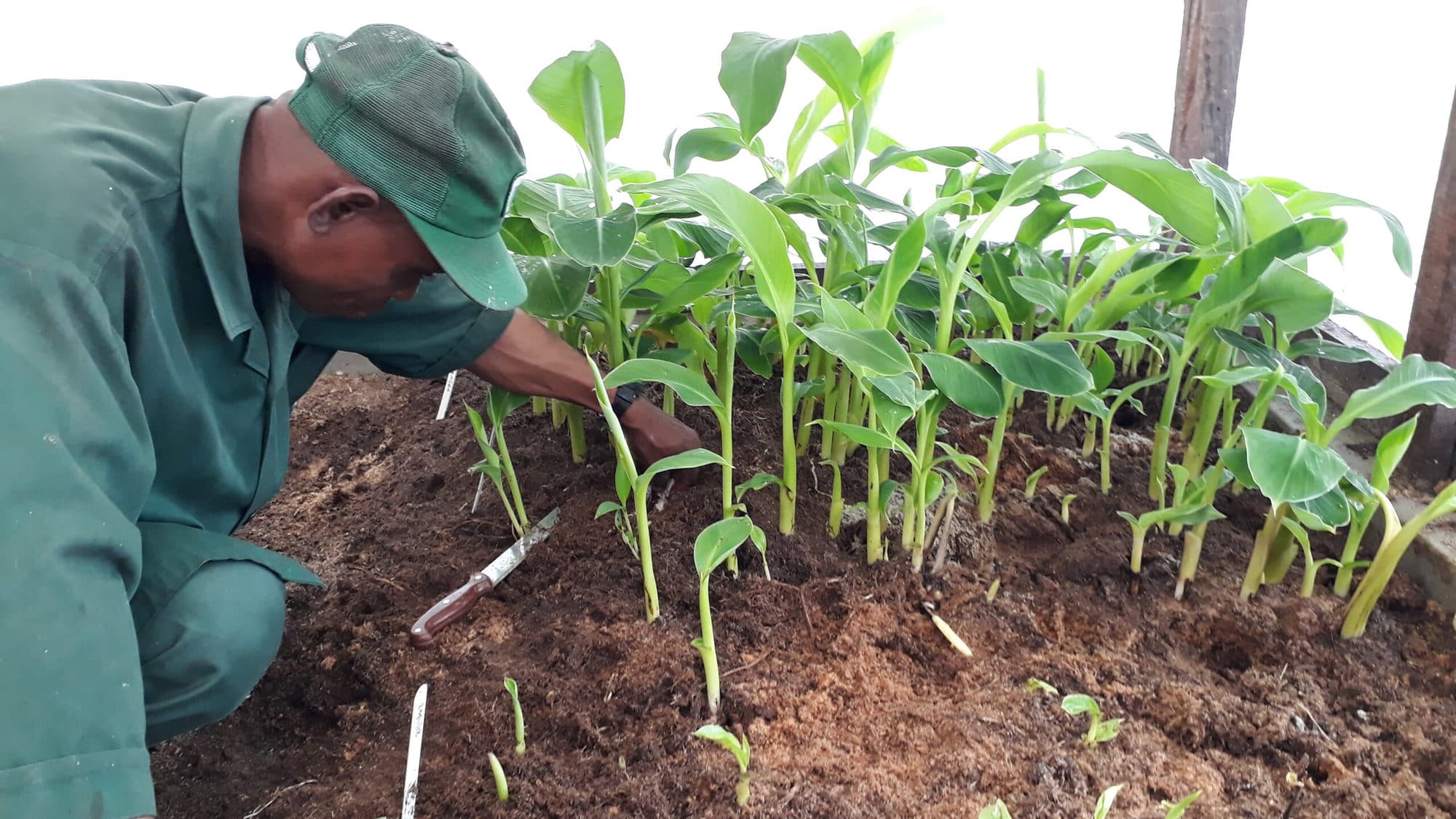
A second approach has been developed through macropropagation using whole stems or stem fragments, whereby primary buds of clean and healthy plants are destroyed, and axillary buds are exposed to high humidity until they grow sprouts which are then harvested, hardened, and distributed. Farmers have also received training to replicate the approach themselves using locally made humidity chambers.
A third approach gets even closer to the grassroots, recognizing that farmers often exchange and sell planting material among themselves. A boiling water treatment was developed and popularized by researchers to sanitize locally propagated planting material. This has proven to be a simple, effective, and readily adoptable technique suitable for smallholder farming conditions.
To support ongoing collaborative research and development, researchers further established MusaBase, an online open-access database on advanced breeding methods. Today, the MusaBase repository is set to track, monitor, and evaluate the distribution of banana and plantain planting material, and the uptake of new improved hybrids, to meet the needs of farmers and consumers.
Header photo: Macropropagation of banana plants. Photo by IITA
The post Healthy banana and plantain planting material for Africa appeared first on CGIAR.
]]>
As a national staple, rice is crucial to food security in the Philippines. Access to data on seasonal changes, outbreaks of pests and diseases, and damage from extreme weather events can help farmers and policymakers make informed decisions to plan for a rice-secure Philippines. The Philippine Rice Information System (PRiSM), developed by CGIAR researchers at […]
The post Satellite rice monitoring: the Philippine Rice Information System (PRiSM) appeared first onCGIAR.
The post Satellite rice monitoring: the Philippine Rice Information System (PRiSM) appeared first on CGIAR.
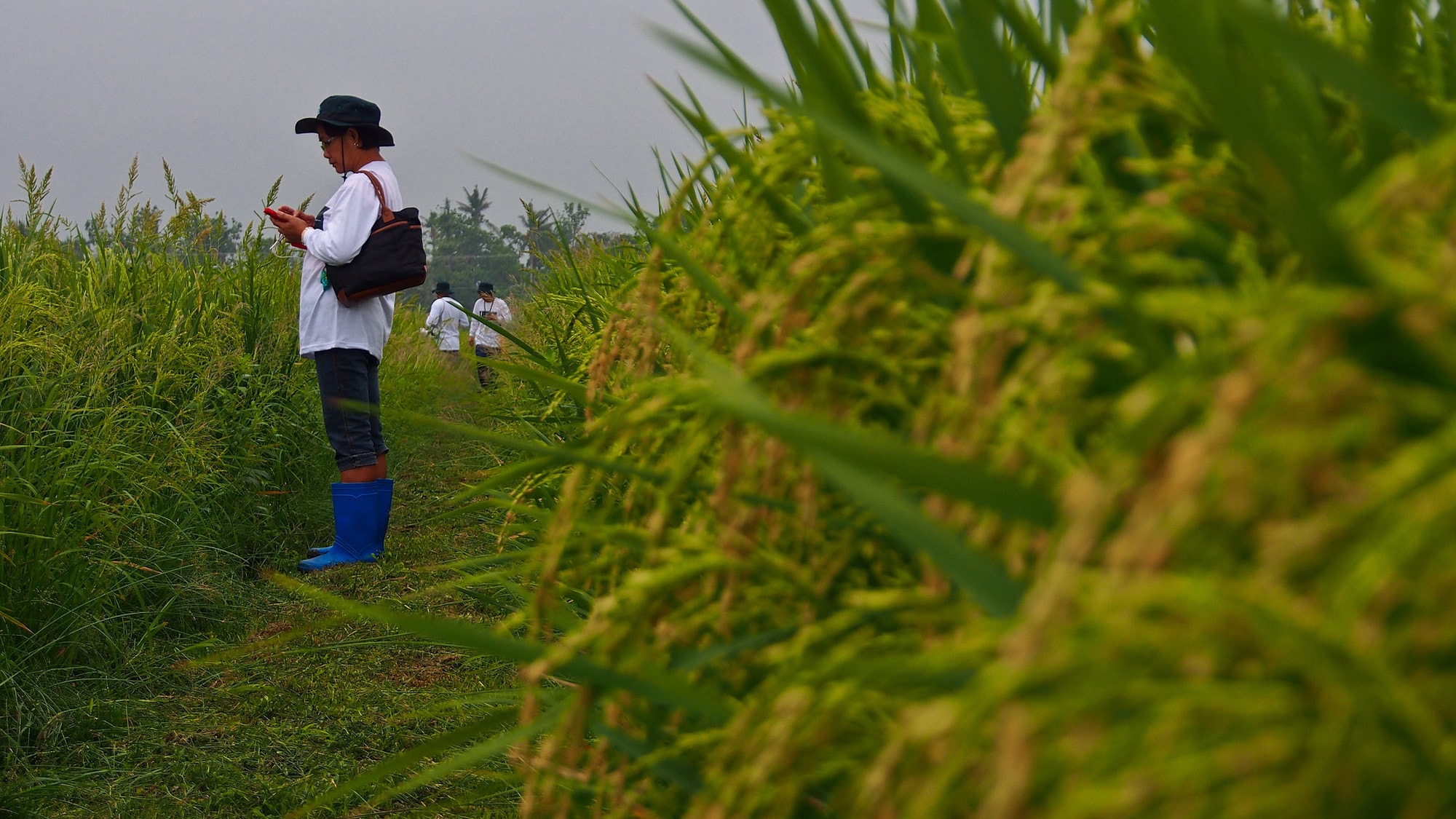
]]>The Philippine Rice Information System (PRiSM), developed by CGIAR researchers at the International Rice Research Institute (IRRI) in collaboration with the Philippine Department of Agriculture, addresses this need by using satellite imagery and other new technologies to generate information on planted rice area, seasonality, yield, and risks to crops.
In operation since 2014, PRiSM is the first satellite-based rice monitoring system in Southeast Asia, serving as model for other countries in the region on the uses of new technologies to boost agricultural production and food security.
PRiSM is the first satellite-based rice monitoring system in Southeast Asia
PRiSM uses data collected from a variety of sources, including remote-sensing satellites, crop modeling, cloud computing, unmanned aerial vehicles, smartphone-based field surveys, statistics, and maps. The maps generated by PRISM can show gradual changes over time, such as during rice-growing seasons, as well as dynamic changes, like crop health after a typhoon.
Start-of-season maps and yield estimates every semester, plus damage assessments from typhoons, floods, and droughts, can be used for rapid decision-making on emergency response, planning, and implementation of rehabilitation programs. Graphs and tabular representations can also be generated showing the occurrence of pests and diseases, and the impact of farmer inputs such as fertilizers, pesticides, and the rice variety used on yields.
Since its inception, PRiSM has generated maps and data on rice area with overall accuracies ranging from 85% to 93% based on more than 1,000 ground observations by partners and local government units from across the country.
Researchers and the Government of the Philippines are using PRiSM to generate accurate data to inform policy, strategy, and disaster response
As a decision-support system, PRiSM can be used in a number of different ways that directly benefit farmers, including monitoring and evaluating crop growth and health, and assessing and forecasting yields. It also provides smallholders with reliable and transparent data for equitable crop insurance products that can reduce their economic vulnerability. Beyond smallholder farmers, researchers and the government are using PRiSM to generate accurate data to inform policy, strategy, and disaster response.
In 2018, IRRI officially handed over operation of PRiSM to the Government of the Philippines. The tool is now overseen by the Philippine Rice Research Institute (PhilRice), which uses the technology to support the Department of Agriculture in making informed decisions for policy formulation and planning.
Learning from the successes of PRiSM, IRRI and partners are further developing initiatives for the Philippines, such as through the Remote Sensing-Based Information and Insurance for Crops in Emerging Economies (RIICE), and WeRise, which utilize the same systems and technologies to benefit rice farmers through insurance and crop advisory solutions.
Header photo: A 2014 field workshop for the launch of PRiSM. Photo by IRRI
The post Satellite rice monitoring: the Philippine Rice Information System (PRiSM) appeared first on CGIAR.
]]>
Water and nutrients are precious resources in agriculture, yet through conventional linear models they are often used once and discarded. CGIAR researchers at the International Water Management Institute (IWMI) have developed several innovative circular economy models for the safe reuse of wastewater and nutrients, supporting waste reduction, improved human and environmental health, and better livelihoods. […]
The post Models to safely reuse wastewater and nutrients appeared first onCGIAR.
The post Models to safely reuse wastewater and nutrients appeared first on CGIAR.
]]>More than 20 innovative business models for domestic waste and wastewater management have been developed and promoted by CGIAR researchers at IWMI, including models to reduce waste volumes and burdens, and increase resource recovery. Many of these low-cost approaches have already been taken up by public-private partnerships.
In Sri Lanka, a new sanitation policy informed by CGIAR research at IWMI in partnership with government opened the door for business opportunities in treating and reusing septic waste. Without access to sewerage, around 96% of households in Sri Lanka depend on septic tanks and other onsite waste management systems, and less than 10% of septic waste is treated, contributing to land and water pollution, and posing a threat to human health.
CGIAR research on wastewater has informed global guidelines to the benefit of the 885 million urban residents exposed to food produced with unsafe irrigation water
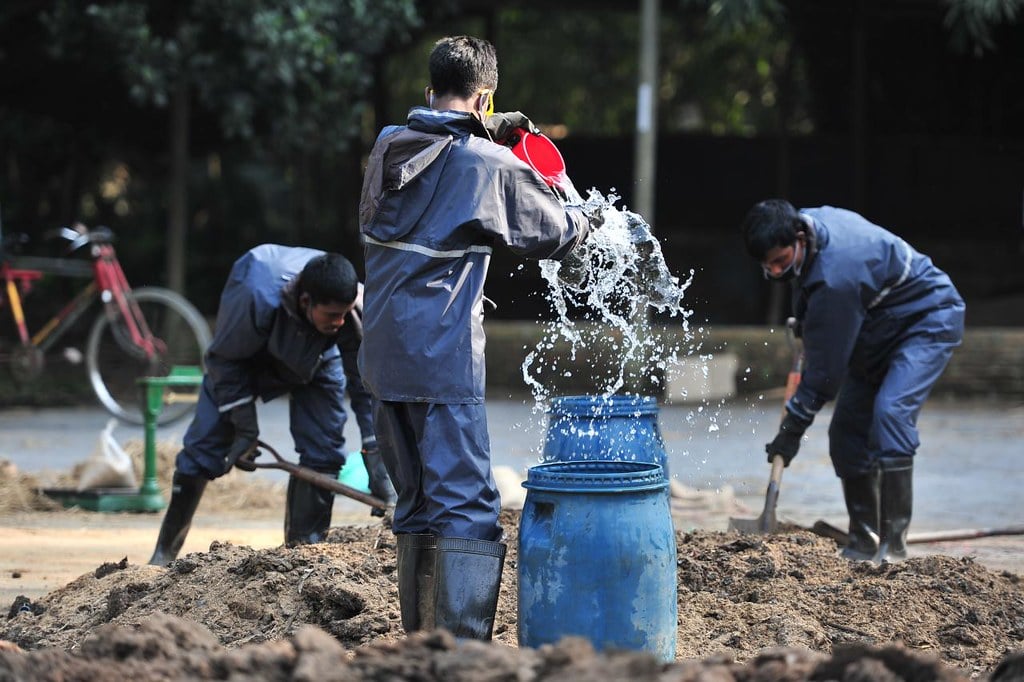
By recognizing septic waste as a resource, the new policy allows for businesses to treat and reuse septic waste by recovering wastewater for irrigation, creating safe fertilizer pellets for crops, or making fuel briquettes that can be burned for energy. This has the potential to reduce the waste burden, support agriculture, and create new opportunities for livelihoods.
In Ghana, CGIAR research at IWMI has contributed to a national irrigation policy in support of wastewater reuse, and to national guidelines on fertilizer subsidies, with the inclusion of waste-based composts. The research has also supported the establishment of three new public-private partnerships that can safely transform organic and/or human waste into fertilizer and fuel.
IWMI’s models for resource recovery and reuse (RRR) have been translated into tertiary curricula adopted by seven leading universities across Asia, Africa, and Europe.
Research into the safe reuse of wastewater in agriculture has had global impact, informing food safety guidelines developed by the World Health Organization, the Food and Agriculture Organization of the United Nations (FAO), and the United States Agency for International Development (USAID), benefiting the 885 million urban residents exposed to food produced with unsafe irrigation water.
Header photo: Dried faecal matter being processed to produce fertilizer pellets in Bangladesh. Photo by N. Palmer/IWMI
The post Models to safely reuse wastewater and nutrients appeared first on CGIAR.
]]>
A big challenge in food systems research is how to reach smallholder farmers with information and advice that could improve their productivity, food security, and livelihoods. CGIAR researchers and partners found success in getting the latest findings to the field via the Volunteer Farmer Trainers project, whereby local farmers were trained by extension workers to […]
The post Volunteer Farmer Trainers as agents of change appeared first onCGIAR.
The post Volunteer Farmer Trainers as agents of change appeared first on CGIAR.
]]>CGIAR researchers and partners found success in getting the latest findings to the field via the Volunteer Farmer Trainers project, whereby local farmers were trained by extension workers to share practical knowledge and methods with others in their communities.
While it was not the first to use this approach, the project was among the first to rigorously assess its effectiveness across different countries and contexts, and identify ways to improve it. The project also demonstrated that farmers as trainers can be successful agents of change.
The research was led by CGIAR researchers at the World Agroforestry Centre (now merged with the Center for International Forestry Research as CIFOR-ICRAF) and the International Livestock Research Institute (ILRI), with support from the CGIAR Research Program on Policies, Institutions and Markets (PIM) and other partners in East Africa and Europe.
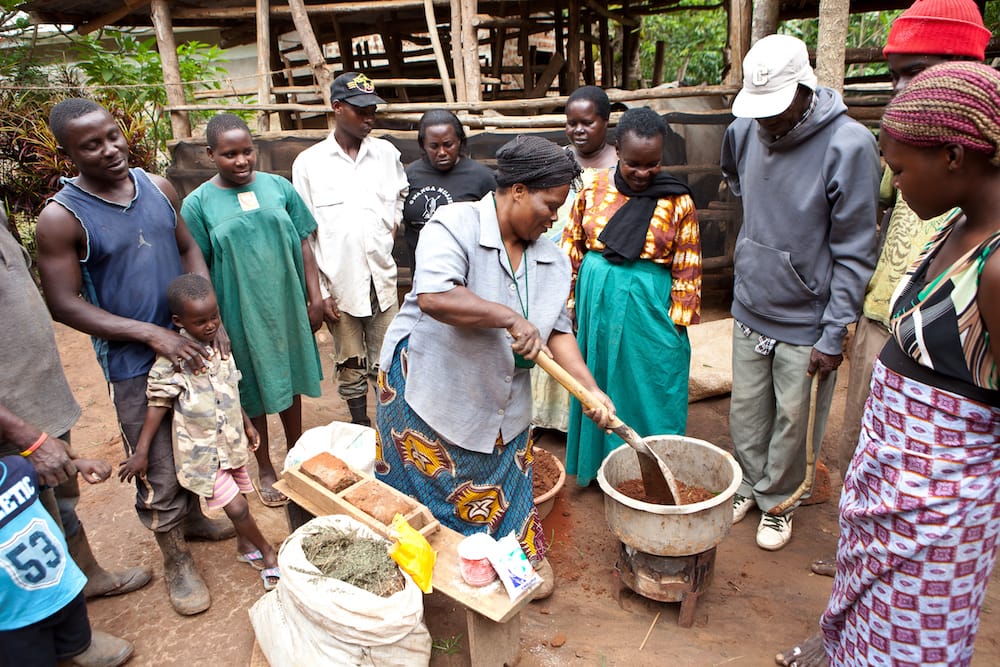
Local farmers volunteered to undergo training by extension staff, and then in turn trained other farmers and shared what they had learned. They were supported to host demonstration plots and share the latest information on improved agricultural practices within their communities.
By 2019, the project had recruited more than 19,000 volunteer farmer trainers, serving about 383,000 farmers
The volunteer farmer trainers were found to be highly effective, training on average 20 farmers per month. As local farmers themselves, they were well-suited to the role – they had in-depth knowledge of local conditions, culture, and practices, lived in the community, spoke the local language, and were able to instill confidence in their fellow farmers.
By 2019, as many as 87 organizations had been part of, or had learned from, the research in East Africa (in Kenya, Tanzania, Rwanda, and Uganda). They had recruited more than 19,000 volunteer farmer trainers, serving about 383,000 farmers.
Importantly, the approach was found to increase the number of women providing and benefiting from extension activities, including in Cameroon, Kenya, Malawi, and Uganda. It showed high potential as a low-cost approach to promoting climate-smart agriculture. And it proved to be sustainable in the long term, continuing to operate effectively beyond the timeframe of the project.
An impact evaluation in a dairy project in Uganda, using a randomized control trial design, demonstrated that two years after the original training, farmers with improved or cross-bred dairy cows in villages with volunteer trainers had increased adoption of improved feeding practices, resulting in higher milk production, compared to farmers in villages without trainers. Two other interventions, signposts at the homes of volunteer trainers and linkages between farmers and nearby extension staff, had further impact on increased productivity. After learning about the project’s preliminary findings, the Government of Uganda included the farmer-to-farmer approach as one of six approaches recommended to extension providers in its 2016 National Agricultural Extension Strategy.
In Rwanda, three years after the end of the project, volunteers were still training farmers with support from the national government, non-governmental organizations and producer organizations. The farmer-to-farmer approach was adopted on a national scale from 2012-2016 with the recruitment and training of 14,200 “farmer promoters”.
In both cases, policymakers’ decisions were influenced and informed by CGIAR research.
Header photo: A volunteer farmer trainer in Uganda trains her peers in how to make mineral blocks for dairy cows. Photo by P. Lutakome
The post Volunteer Farmer Trainers as agents of change appeared first on CGIAR.
]]>
Cactus pear, known in some desert areas as ‘green gold’ for its many uses, can grow in harsh, water-scarce conditions with limited to no input. Its fruit and stems, or cladodes, are rich in water and nutrients, making it a useful plant for consumption by animals and humans alike in dry climates. CGIAR scientists at […]
The post Cactus pear: nature’s ‘green gold’ for better farmer livelihoods appeared first onCGIAR.
The post Cactus pear: nature’s ‘green gold’ for better farmer livelihoods appeared first on CGIAR.
]]>CGIAR scientists at the International Center for Agricultural Research in the Dry Areas (ICARDA) were the first to research and scale up cactus pear as a crop that can be easily cultivated and utilized by millions of farmers in dry regions to improve nutrition, provide fodder reserve, and boost livelihoods.
Research began by assessing the adaptability of different cactus pear varieties across a range of agro-ecological zones, based on how well they grew and how often they bore fruit. The best adapted varieties were then multiplied, and a suite of best-bet agronomic practices was developed to guide healthy establishment and survival of cactus pear plants, and to maximize the productivity of their cladodes and fruits.
In partnership with national agricultural research systems (NARS), scientists then carried out wide awareness–building and capacity–development activities, including field days, social media campaigns and the production of a special documentary broadcast on national TV, with the aim of changing farmers’ perceptions, attitudes, and practices around cactus pear, while showing them the advantages of the plant as fodder reserve for livestock.
In some locations, replacing green fodder with cactus pear has resulted in 30% extra milk yields from livestock
Cactus pear is now a highly promising crop across dry areas in the Middle East, North Africa, and in India. In some locations, it has replaced up to 35% of less hardy, unreliable, green fodder, especially during drier periods, resulting in 30% extra milk yields from livestock.
Several cactus pear nurseries have been launched across India and Jordan, and an awareness outreach program has been established to inform decision–makers, government officials, and farmers beyond the CGIAR sphere of influence about the crop’s importance. Studies with farmers in India and Pakistan indicate that 90% of responders are eager to begin growing the plant.
FAO-ICARDA CactusNet, an International Technical Cooperation Network on Cactus Pear, has been established in partnership with the Food and Agriculture Organization of the United Nations (FAO). Through the network, ICARDA facilitates business development “entrepreneurship” by sharing experiences from all over the world in all aspects of cactus use, including for medicinal and food purposes.
A Google Earth Engine (GEE) map has also been developed and trialed by researchers to show suitable areas for cultivation of the plant across India, a technology that can now be applied to any country and crop. A safer, more practical, and more cost-effective cactus pear chopper has also been designed to speed up harvesting and ease incorporation of cactus pear into livestock diets.
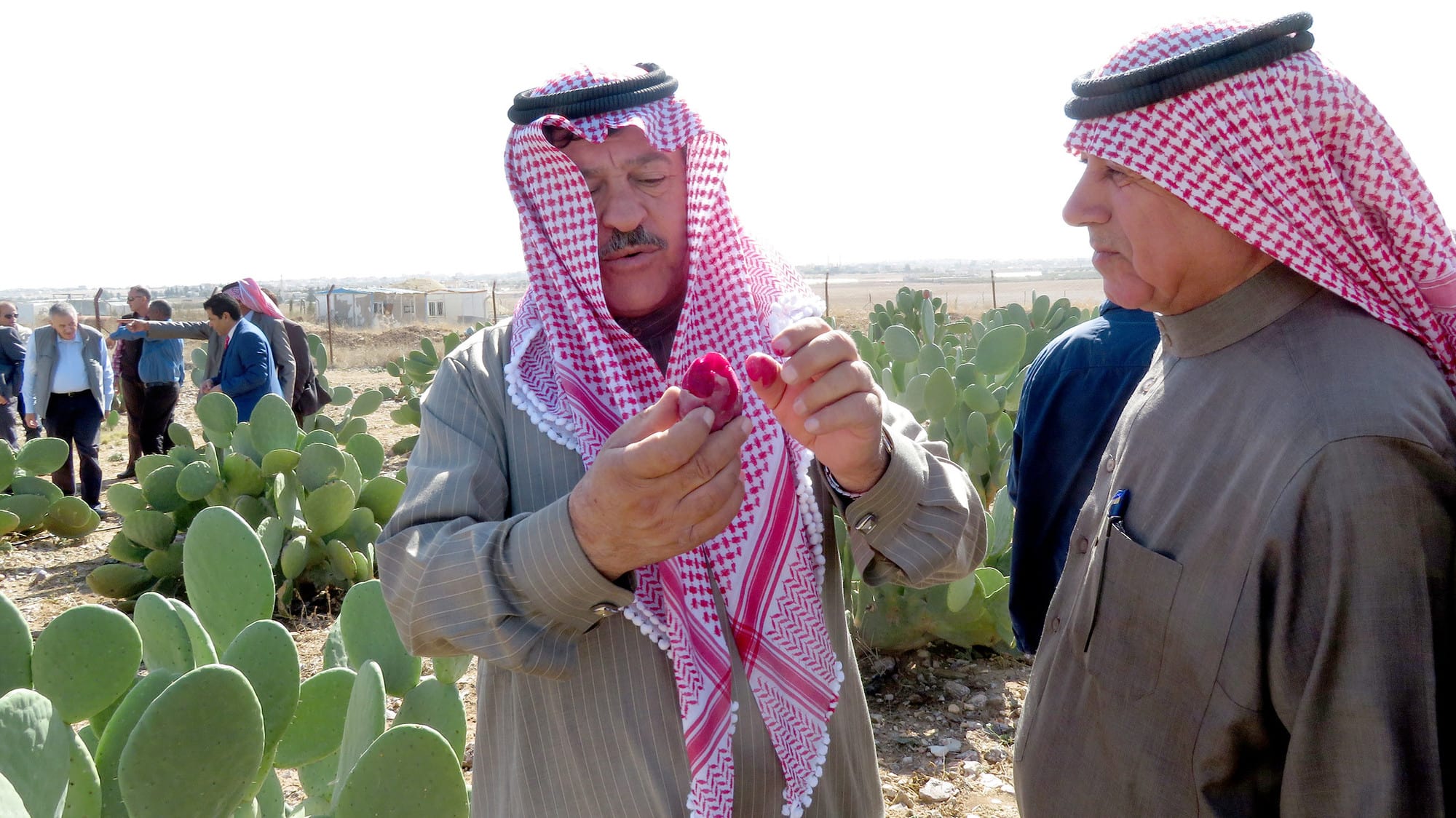
Header photo: A farmer tastes the red fruit of the cactus pear in Madaba, Jordan. Photo by S. Hassan/ICARDA
The post Cactus pear: nature’s ‘green gold’ for better farmer livelihoods appeared first on CGIAR.
]]>
Disease can be devastating for livestock, and for the people whose livelihoods depend on them. For many pastoralists and small-scale farmers, the loss of even one cow can be disastrous. East Coast fever – a cancer-like, tick-transmitted disease first discovered in 1903 in Africa – kills cattle within three weeks of infection through the build-up […]
The post A vaccine against the lethal cattle disease East Coast fever appeared first onCGIAR.
The post A vaccine against the lethal cattle disease East Coast fever appeared first on CGIAR.
]]>East Coast fever – a cancer-like, tick-transmitted disease first discovered in 1903 in Africa – kills cattle within three weeks of infection through the build-up of excess fluid in their lungs, drowning the animals. Endemic across a dozen African countries, the disease kills one cow every 30 seconds. In 2005, its annual cost was estimated at $300 million.
Building on decades of research, CGIAR scientists at the International Livestock Research Institute (ILRI) have helped to develop and mass produce a vaccine for the disease, in partnership with the former East African Veterinary Research Organisation, now the Veterinary Research Centre and part of today’s Kenya Agricultural & Livestock Research Organization.
Two large batches of the vaccine were manufactured by ILRI and partners in 1996 and 2008, comprising 600,000 doses and 1.2 million doses, respectively. Through commercial distribution, about 2 million cattle have now been vaccinated, increasing the incomes of 156,000 households by $74 million. From 1997 to 2014, the vaccine prevented the untimely deaths of some 400,000 animals.
The vaccine uses an ‘infection-and-treatment’ method (ITM). Animals are inoculated with a cocktail of live virulent strains of the causative parasite, and a long-acting antibiotic to attenuate the ensuing infection. A single vaccination provides life-long immunity against East Coast fever.
The method is used today in Kenya, Malawi, Tanzania, and Uganda, where calf mortality due to East Coast fever has reduced by up to 95%. Efforts are now being directed at improving and scaling up production of the vaccine, to make it widely and cheaply available to the millions of livestock-dependent people across eastern, central and southern Africa, where the disease remains endemic.
Vaccination has increased incomes for livestock-keeping households in various ways. Aside from avoided herd losses, milk sales have increased due to more productive cows, vaccinated bull calves have fetched higher market prices than non-vaccinated calves, and, in the pastoral sector, the vaccine has meant a higher number of yearling animals.
Studies in Tanzania and Kenya confirm that where incomes have increased due to ITM vaccination, households have typically spent the extra income on essentials such as school fees and staple foods, as well as on commercializing their livestock enterprises.
There have been additional income benefits for distributors and vaccinators who provide the ITM vaccine, and for the current manufacturers of the vaccine based at the Centre for Ticks and Tick-Borne Diseases, Malawi.
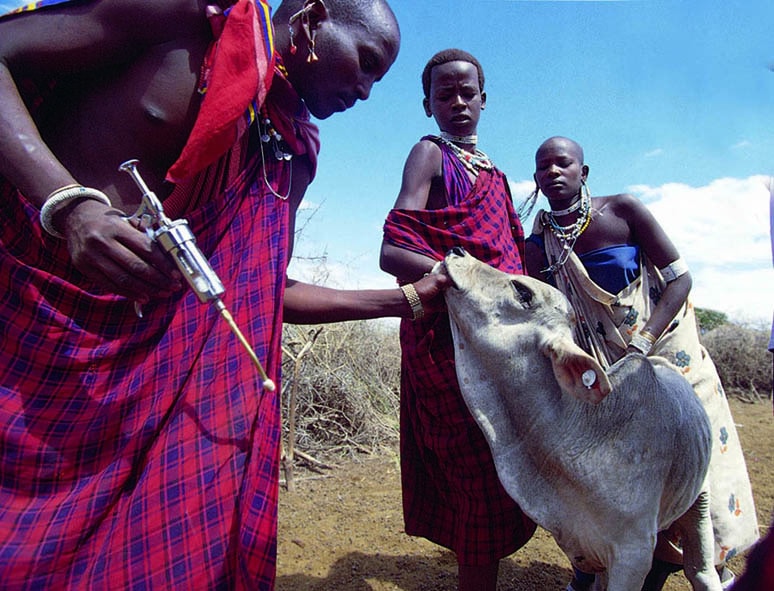
Header image: A Maasai man treats a calf with antibiotics as part of the ‘live’ infection-and-treatment method of immunizing cattle against East Coast fever. Photo by S. Mann/ILRI
The post A vaccine against the lethal cattle disease East Coast fever appeared first on CGIAR.
]]>