
Southern Africa faces converging challenges that demand coordinated response. In 2024, extreme weather led multiple nations to declare states of emergency, prompting the Southern African Development Community (SADC) to convene an Extraordinary Summit of Heads of State and Governments. The scale of impact is significant: approximately 58 million people across the region have been affected, […]
The post Southern Africa Regional Conference on Climate, Peace, Security and Displacement appeared first onCGIAR.
The post Southern Africa Regional Conference on Climate, Peace, Security and Displacement appeared first on CGIAR.
]]>Southern Africa faces converging challenges that demand coordinated response. In 2024, extreme weather led multiple nations to declare states of emergency, prompting the Southern African Development Community (SADC) to convene an Extraordinary Summit of Heads of State and Governments. The scale of impact is significant: approximately 58 million people across the region have been affected, with the Food and Agriculture Organisation (FAO) and World Food Programme (WFP) estimating that 27.4 million people face food insecurity.
Climate variability intersects with existing socioeconomic and political vulnerabilities, creating complex challenges for regional stability and peaceful community relations.
The CGIAR Climate Security Team at the Alliance of Bioversity and CIAT, working with partners in Mozambique, Zambia, and Zimbabwe, has conducted extensive research on how climate impacts on food, land, and water systems affect social dynamics and community resilience. This work has documented how climate-driven changes create new pressures on community relations and peaceful coexistence.
The evidence is clear. The next step is translating this research into policies and strategies that address real-world challenges facing communities across Southern Africa.
Conference Purpose
This Regional Conference brings together researchers, policymakers, practitioners, and civil society to engage with emerging evidence on climate, peace, and security dynamics in Southern Africa. The gathering provides a platform for knowledge exchange, cross-sector collaboration, and the development of policy-relevant solutions to strengthen social cohesion and climate resilience.
Who Should Participate
- Researchers working on climate, peace, and security issues
- Policymakers from national and regional institutions
- Practitioners in humanitarian, development, and peacebuilding sectors
- Civil society representatives from affected communities
- Government officials responsible for climate adaptation and security policies
Conference Objectives
- Share research findings and insights on climate, peace, and security from across Southern Africa
- Foster dialogue between researchers, policymakers, and humanitarian-development-peace practitioners on climate-related human security risks
- Develop practical, context-specific recommendations for addressing regional climate, peace, and security challenges
Expected Outcomes
- Integration of climate, peace, and security perspectives into ongoing climate initiatives across Southern Africa
- Increased collaboration between research institutions, government entities, international organizations, and community-based groups
- Enhanced capacity for incorporating climate security considerations into academic curricula and policy frameworks
- Strengthened regional networks for addressing climate-related security challenges
Registration Details
Date: 22 October, 2025
Time: 9:00 AM SAST
Venue: Online
The post Southern Africa Regional Conference on Climate, Peace, Security and Displacement appeared first on CGIAR.
]]>
About the webinar series Breeding Resources‘ Digital Solutions unit provides digital solutions designed to enhance efficiency in research data management, knowledge sharing, and decision-making within the CGIAR community. In this webinar series, the Digital Solutions team will provide updates on latest initiatives, key achievements, and progress made to support breeders and researchers worldwide with key digital […]
The post Digital Solutions Webinar Series appeared first onCGIAR.
The post Digital Solutions Webinar Series appeared first on CGIAR.
]]>About the webinar series
Breeding Resources‘ Digital Solutions unit provides digital solutions designed to enhance efficiency in research data management, knowledge sharing, and decision-making within the CGIAR community.
In this webinar series, the Digital Solutions team will provide updates on latest initiatives, key achievements, and progress made to support breeders and researchers worldwide with key digital tools and solutions.
To join, check your inbox for an email invite or send a message to j.puech@cgiar.org.
Schedule
| # | Date | Title | Content | Resources |
| 1 | 3 May 2025 | Digital Solutions Q1 2025 Webinar |
|
Recording |
| 2 | 5 December 2024 | Digital Solutions – EBS Q4 2024 webinar | During this session, Digital Solutions team of experts shares insights into the latest EBS improvements and key outcomes achieved in the second half of 2024. You’ll discover how these innovations can enhance your work and hear questions from the group, through the Q&A session. | Recording |
The post Digital Solutions Webinar Series appeared first on CGIAR.
]]>
Date: Thursday, May 8, 2025Duration: 1 hour Presentation: Breeding Resources Knowledge Exchange Program (KEP) presentation Recording About the event At the end of 2024, the Breeding Resources team launched its inaugural Knowledge Exchange Mentorship Program (KEP) – an initiative aimed at building capacity and strengthening collaboration across CGIAR and national partner breeding programs. This webinar […]
The post Breeding Resources Knowledge Exchange Program: outcomes and next steps appeared first onCGIAR.
The post Breeding Resources Knowledge Exchange Program: outcomes and next steps appeared first on CGIAR.
]]>Duration: 1 hour
Presentation: Breeding Resources Knowledge Exchange Program (KEP) presentation
Recording
About the event
At the end of 2024, the Breeding Resources team launched its inaugural Knowledge Exchange Mentorship Program (KEP) – an initiative aimed at building capacity and strengthening collaboration across CGIAR and national partner breeding programs.
This webinar will showcase key outcomes from the first cohort of the KEP and offer insights into how both mentors and mentees have integrated new knowledge and practices into their organizations. We’ll also highlight the broader impact of the program on professional development, leadership, and systems thinking in crop breeding.
What to expect?
- First-hand reflections from mentors and mentees
- Concrete examples of how the program influenced institutional change
- Lessons learned and what we’re taking into the next round of KEP
- A look at upcoming opportunities for engagement
Who should attend
This event is open to:
- CGIAR and NARES staff working in crop breeding and capacity development
- Anyone interested in knowledge exchange, mentorship, and organizational learning
- Stakeholders supporting institutional change and innovation in agricultural R&D
The post Breeding Resources Knowledge Exchange Program: outcomes and next steps appeared first on CGIAR.
]]>
The post CGIAR Science Week 2025 appeared first onCGIAR.
The post CGIAR Science Week 2025 appeared first on CGIAR.
]]>
Climate extremes in Ethiopia are intensifying pressure on food, land, and water systems, destabilizing livelihoods, health, and socio-economic stability. Competition over dwindling resources, alongside displacement from refugees/IDPs, risks eroding social cohesion—particularly in climate-vulnerable regions. Gender, age, and livelihood disparities further compound these challenges, demanding inclusive solutions. Regional initiatives like the African Union’s Common Position on Climate, […]
The post Workshop: Towards a common vision: The impact of climate change on human security in Ethiopia appeared first onCGIAR.
The post Workshop: Towards a common vision: The impact of climate change on human security in Ethiopia appeared first on CGIAR.
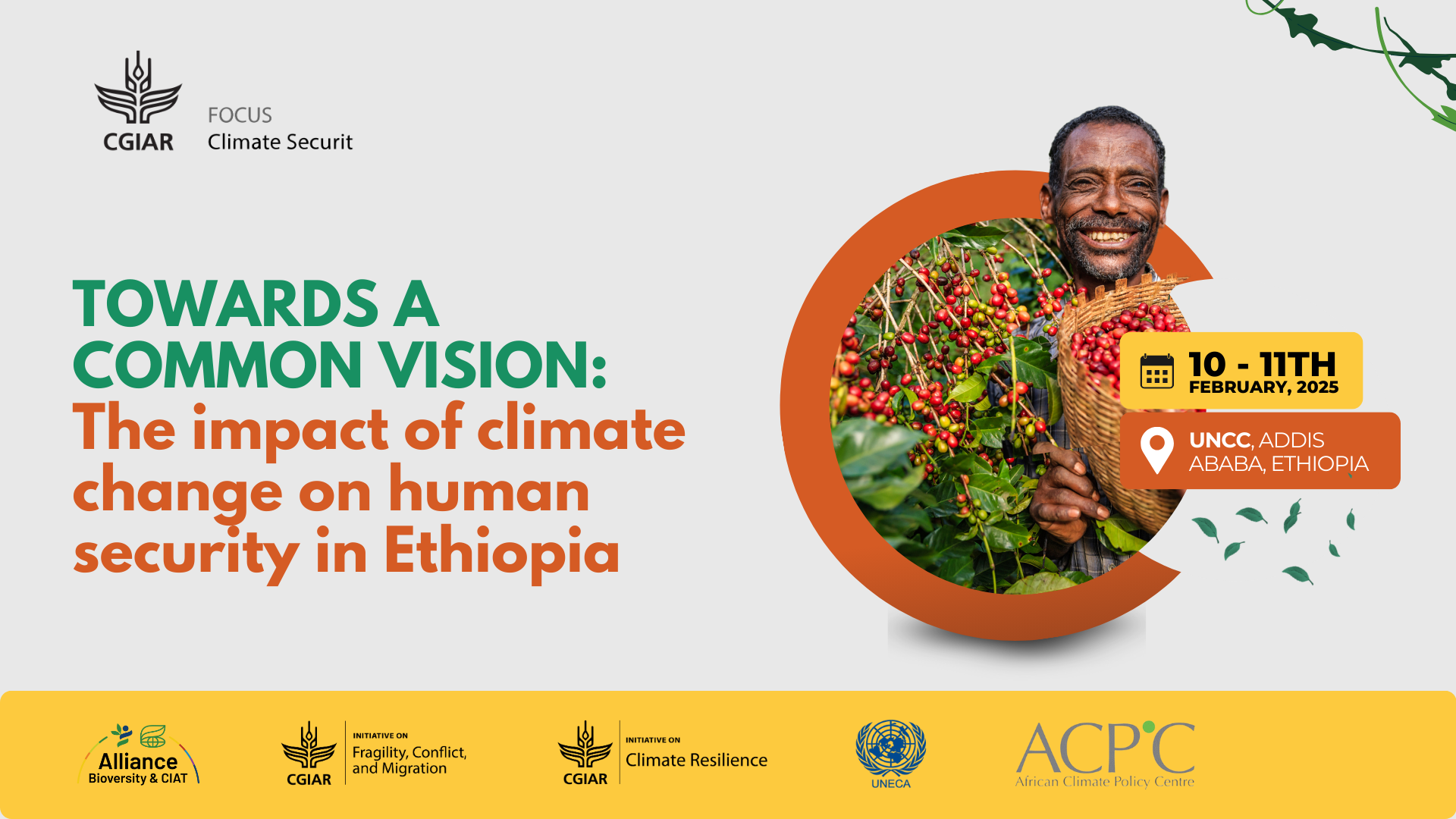
]]>Climate extremes in Ethiopia are intensifying pressure on food, land, and water systems, destabilizing livelihoods, health, and socio-economic stability.
Competition over dwindling resources, alongside displacement from refugees/IDPs, risks eroding social cohesion—particularly in climate-vulnerable regions. Gender, age, and livelihood disparities further compound these challenges, demanding inclusive solutions.
Regional initiatives like the African Union’s Common Position on Climate, Peace and Security and IGAD’s Climate Adaptation Strategy 2023-2030 highlight opportunities to leverage climate action for conflict prevention. It is in this context that the CGIAR FOCUS Climate Security team of the Alliance of Bioversity International and CIAT, co-convenes a stakeholder workshop in partnership with African Climate Policy Center, and the United Nations Economic Commision for Africa (UNECA).
This workshop aligns with the efforts mentioned, fostering dialogue on national and transboundary risks to peace and stability.
Objectives
This two-day workshop aims to:
- Build consensus on climate-driven vulnerabilities and human security risks in Ethiopia.
- Co-identify solutions using the Three Horizon Method:
- Horizon 1: Current climate impacts and resource tensions.
- Horizon 3: Envisioned resilient, cohesive communities.
- Horizon 2: Pathways for cross-sector collaboration (governments, NGOs, private sector).
Expected Outcome: A shared roadmap to integrate climate adaptation with peacebuilding, supporting Ethiopia’s resilience goals.
AGENDA
| Day 1: Identifying Climate, Peace, and Human Security Issues | ||
| 09:00 – 10:00 | Welcome
– Opening remarks by the workshop facilitator and co-conveners · Dr. Cosmas Ochieng, Director, Climate Change, Food Security and Natural Resource Division, Economic Commission for Africa · Dr. Grazia Pacillo, Global Co-lead for Climate Security, Alliance of Bioversity and CIAT · Dr. Ramiz Alakbarov, UN Resident and Humanitarian Coordinator, United Nations, Ethiopia · H.E. Dr. Girma Amente, Minister of Agriculture, Ethiopia · H.E. Mr. Seyoum Mekonnen, State Minister, Ministry of Planning and Development of the Federal Democratic Republic of Ethiopia |
Moderator:
Dr. James Murombedzi, Coordinator, African Climate Policy Centre, ECA
|
| 10:00 – 10:30 | – Presentation on workshop agenda and goals
· Overview of climate security · Aims and objectives of workshop · Three Horizon Method overview |
Presenters:
Dr. Radhika Singh, CIAT Dr. Joyce Takaindisa, CIAT Victor Villa, CIAT |
| 10:30 – 10:45 | Coffee Break | |
| 10:45 – 11:45 | Session 1: Panel discussion on key issues in climate, peace, and human security
– Types of migration, drivers, and impacts – Disaster risk reduction and disaster response – Effects of climate change on specific groups – Competition over natural resources |
Moderator:
Dr. Joyce Takaindisa, CIAT
Participants: Nimo Ahmed Abdilahi, UNHCR Enguday Meskele, Ethiopian Human Rights Commission Mawira Chitima, IFAD Beza Teferra, Welthungerhilfe |
| 11:45 – 12:00 | Comments and questions for panelists | Moderator:
Dr. Joyce Takaindisa, CIAT |
| 12:00 – 13:00
|
Presentations on research approaches and initiatives
– CIAT Climate Security regional office presentation on “Research Approaches and Methodologies in Climate, Peace, And Security” – CIAT Ethiopia office presentation on “Building Climate Resilience and Conflict Management in Ethiopia’s Pastoral Regions through a User-Centered Water and Pasture Monitoring-Forecasting-Early Warning System” |
Presenters:
Brenda Chepngetich, CIAT Victor Villa, CIAT Dr. Sintayehu Alemayehu, CIAT |
| 13:00 –14:00 | Lunch | |
| 14:00 – 15:00 | Session 2: Thematic discussion in working groups (Horizon 1)
– What are the current issues related to the effects on climate change on human security in Ethiopia? Articulate key priorities. |
Facilitators:
CIAT Climate Security Team |
| 15:00 – 16:00 | Session 3: Goal mapping for desired futures (Horizon 3)
– What are short, medium, and long-term realistic visions for the future? Articulate visions for the different thematic areas. Coffee is served in working groups |
Facilitators:
CIAT Climate Security Team |
| 16:00 – 16:45 | Plenary
– Presentation by each working group on key issues and desired futures for each theme |
Facilitators:
Brenda Chepngetich, CIAT Victor Villa, CIAT |
|
16:45 – 17:00 |
Closing
– Open floor for questions and reflections and overview of Day 2 activities |
Facilitators:
Dr. Radhika Singh, CIAT |
| Day 2: Tackling Climate, Peace, and Human Security Issues | ||
| 09:00 – 09:30 | Recap of Day 1 and overview of the day’s agenda | Facilitator:
Dr. Joyce Takaindisa, CIAT |
| 09:30 – 10:30 | Session 4: Panel discussion on response to climate, peace and human security issues
– Coordination between stakeholders – Improving informal/formal institutional capacities – Strengthening policy coherence across sectors – Accessing finance and funding opportunities |
Moderator:
Dr. Radhika Singh, CIAT
Participants: Tendai Kasinganeti, UN Office to the African Union Dr. James Murombedzi, UNECA Habtamu Farada, Ministry of Finance |
| 10:30 – 10:45 | Comments and questions for panelists | Moderator:
Dr. Radhika Singh, CIAT |
| 10:45 – 11:00 | Coffee Break | |
| 11:00 – 12:00 | Session 5: Thematic discussion in working groups (Horizon 2)
Given the current issues and key priorities (Horizon 1) and desired visions for the future (Horizon 3), what realistic steps can be taken to achieve goals? |
Facilitators:
CIAT Climate Security Team |
| 12:00 – 13:00 | Plenary
– Presentation by each working group on how to improve response to climate, peace, and human security issues |
Facilitators:
Brenda Chepngetich, CIAT Victor Villa, CIAT |
| 13:00 – 14:00 | Lunch Break | |
| 14:00 – 15:00 | Session 6: Research and evidence
– Brainstorming session on key research and data gaps on tackling climate, peace, and human security issues |
Facilitator:
Dr. Grazia Pacillo, CIAT |
| 15:00 – 16:00 | Concluding Remarks
– Summary of workshop outcomes and discussion on next steps |
Facilitator:
Dr. Grazia Pacillo, CIAT Dr. Joyce Takaindisa, CIAT |
The post Workshop: Towards a common vision: The impact of climate change on human security in Ethiopia appeared first on CGIAR.
]]>
Join us at the 9th International Greenhouse Gas and Animal Agriculture (GGAA) Conference, a gathering of leading scientists in the field of greenhouse gases from animal agriculture. The GGAA conference takes place in Nairobi, Kenya from 5 to 9 October 2025, hosted by the International Livestock Research Institute (ILRI) and the Norwegian Institute of Bioeconomy […]
The post The 9th International Greenhouse Gas and Animal Agriculture Conference appeared first onCGIAR.
The post The 9th International Greenhouse Gas and Animal Agriculture Conference appeared first on CGIAR.
]]>The GGAA conference takes place in Nairobi, Kenya from 5 to 9 October 2025, hosted by the International Livestock Research Institute (ILRI) and the Norwegian Institute of Bioeconomy Research (NIBIO).
At the 9th GGAA Conference, you’ll have the chance to delve into cutting-edge research, connect with experts and participate in lively discussions covering greenhouse gas mitigation, measurement techniques, advanced modeling and on-farm practices.
You’ll get to discover insights into policies addressing agricultural impacts on greenhouse gases and stay updated on the latest scientific developments.
There will also be field visits you can join to national parks, farms and rangeland sites, including ILRI’s Kapiti Research Station and Wildlife Conservancy on the outskirts of Nairobi.
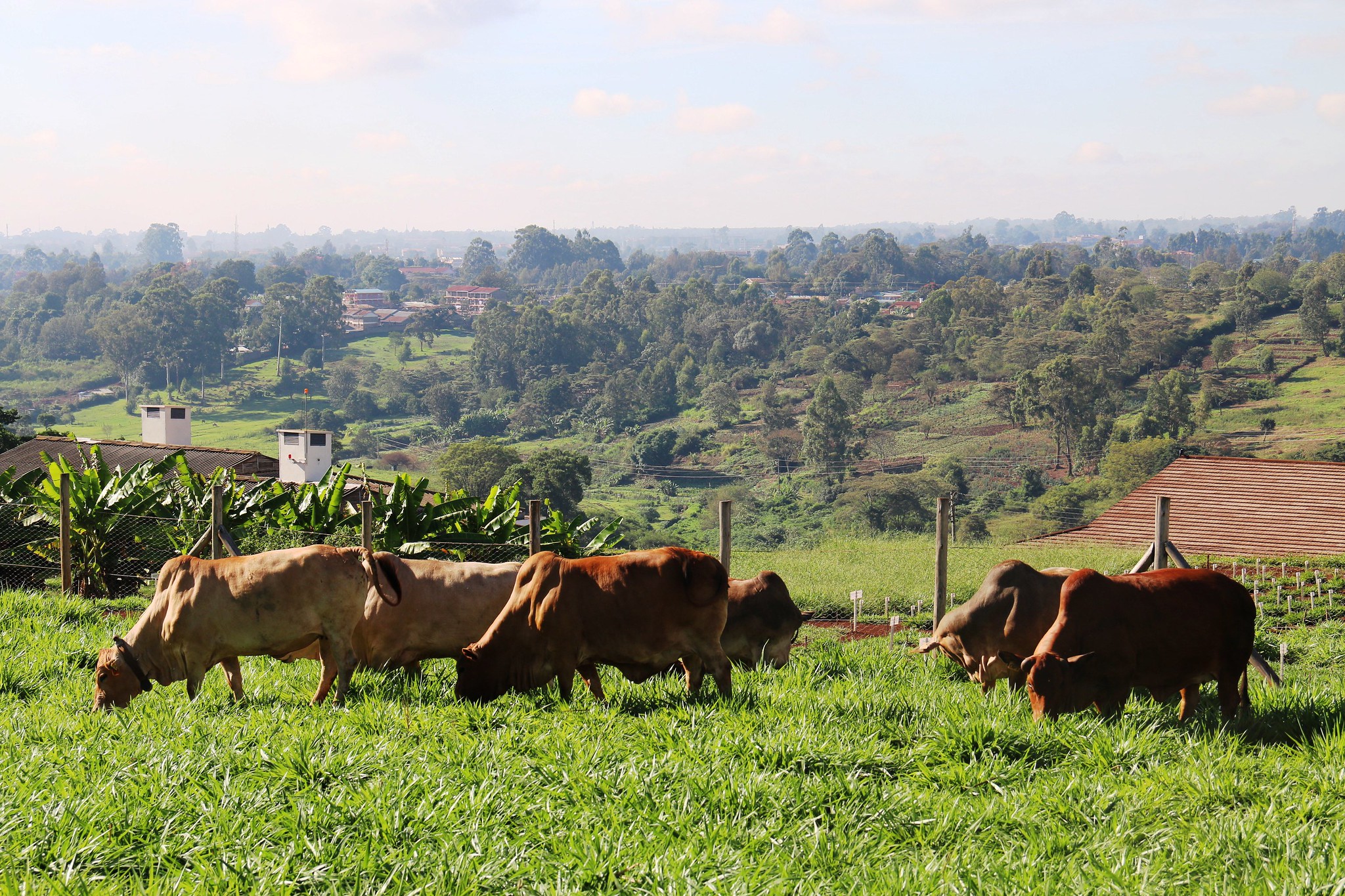
Photo: Cattle grazing on Brachiaria at the ILRI campus in Nairobi, Kenya (ILRI/Collins Mutai)
The post The 9th International Greenhouse Gas and Animal Agriculture Conference appeared first on CGIAR.
]]>
The 26th Conference of the World Organisation for Animal Health (WOAH) Regional Commission for Africa takes place in Addis Ababa, Ethiopia from 4 to 7 February 2025. The theme of the conference is Animal health for food security and public health in Africa. Representatives from member states of the African Union, mainly Chief Veterinary Officers […]
The post 26th Conference of the World Organisation for Animal Health (WOAH) Regional Commission for Africa appeared first onCGIAR.
The post 26th Conference of the World Organisation for Animal Health (WOAH) Regional Commission for Africa appeared first on CGIAR.
]]>The theme of the conference is Animal health for food security and public health in Africa.
Representatives from member states of the African Union, mainly Chief Veterinary Officers and WOAH permanent delegates, are expected to take part.
Musa Mulongo, senior scientist at the International Livestock Research Institute (ILRI) and platform coordinator for Transformation of Animal Health Services and Solutions in Low- and middle-income countries (TAHSSL), will present a technical report on contagious bovine pleuropneumonia control and present some recommendations for adoption.
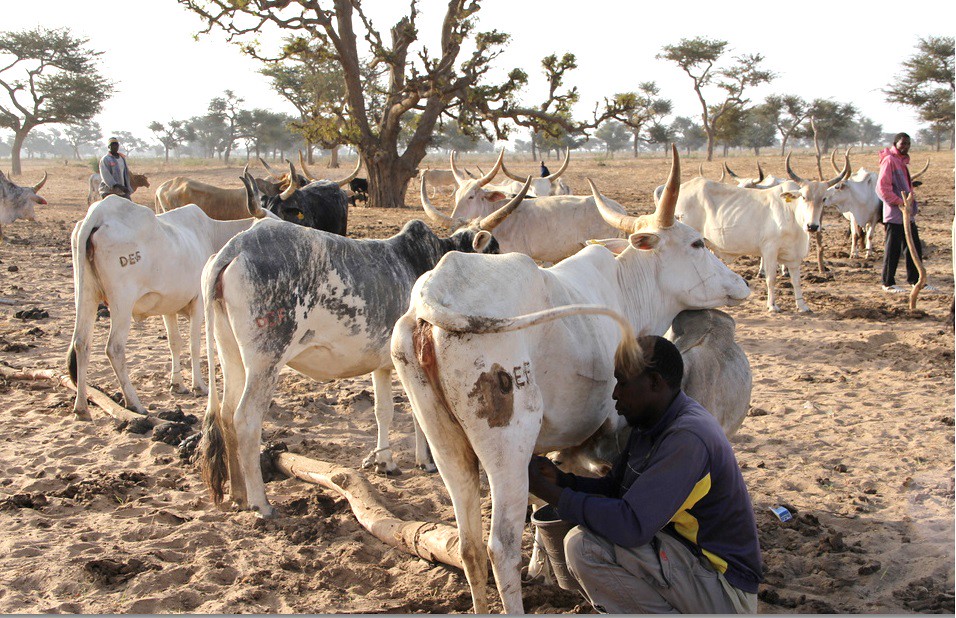
Photo: Milking line of cattle in Senegal (ILRI/Karen Marshall)
The post 26th Conference of the World Organisation for Animal Health (WOAH) Regional Commission for Africa appeared first on CGIAR.
]]>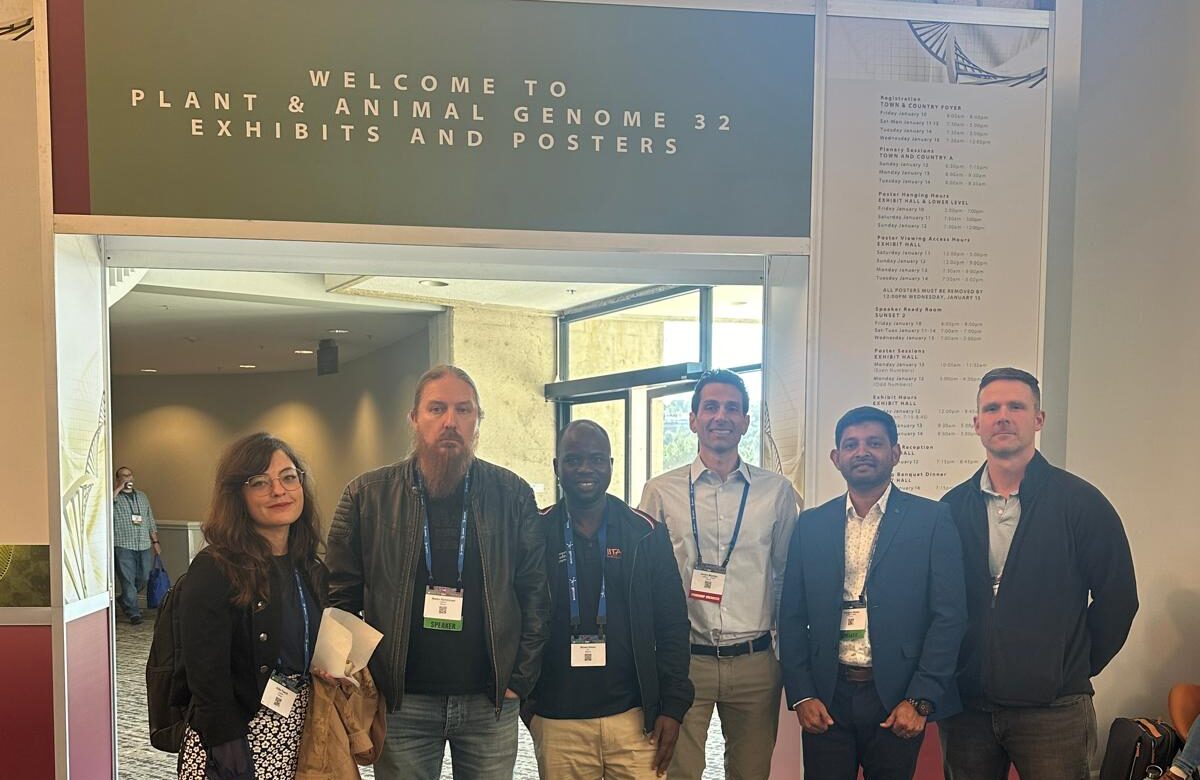
The Plant and Animal Genome Conference, PAG, is recognized as the premier global forum for plant and animal genome research. It attracts thousands of scientists each year, facilitatingcollaboration and knowledge-sharing through technical presentations, poster sessions, workshops, and exhibitions. At the 32nd edition of PAG, Breeding and Research Services (BRS) took the stage to showcase how […]
The post Breeding and Research Services at PAG2 appeared first onCGIAR.
The post Breeding and Research Services at PAG2 appeared first on CGIAR.
]]>BRS session featured presentations about:
- The Enterprise Breeding System (EBS): CGIAR’s preferred crop breeding data management platform and its deployment at IITA for legumes;
- Bioflow: The cutting-edge CGIAR Breeding Analytics Pipeline;
- 4kRiCA Genotyping Panel: Powering the development of superior rice varieties globally;
- How Global Shared Services Lab Services aid global agricultural progress;
- AgPile, a federated platform for global agricultural data integration.
Agenda
| # | Content | Speakers | Presentation | Recording |
| 1 | EBS: Where cutting-edge technology meets breeding expertise |
Marko Kärkkäinen,B |
EBS Where Cutting-Edge Technology Meets Breeding Expertise | Recording |
| 2 | How EBS is advancing improved crop breeding decisions: the legume case review |
Simon Imoro, |
How EBS Is Advancing Improved Crop Breeding Decisions The Legumes Case Review | Recording |
| 3 | Agpile: a data ecosystem enabling AI for small-scale producers |
James Clevenger, |
AgPile Data Ecosystem for AI Enablement in Ag | |
| 4 | Empowering breeding decisions with Bioflow: a transformative open-source community tool for data-driven agriculture research from CGIAR |
Lorena Guimaraes Batista, |
Empowering breeding decisions with Bioflow: A transformative open-source community tool for data-driven agriculture research from CGIAR | |
| 5 | Advancing Genomic Innovations: CGIAR Breeding Research and Services for Global Agricultural Progress |
Rajaguru Bohar |
||
| 6 | 4kRiCA: an upgraded mid-density genotyping panel for global rice breeding efforts |
Suresh Babu Kadaru, |
PAG32 Presentation – IRRI 4kRiCA – Suresh Kadaru – Jan2025 |
The post Breeding and Research Services at PAG2 appeared first on CGIAR.
]]>
Undernutrition during childhood and early adolescence has long-term consequences for development and health, and for girls it can affect the survival and wellbeing of their children. Diet-related risk factors are estimated to cause 20% of global mortality, and changes in food systems have led to rapid shifts to unhealthy diets and reductions in physical activity, […]
The post School meals in the 21st century – emerging evidence and future directions appeared first onCGIAR.
The post School meals in the 21st century – emerging evidence and future directions appeared first on CGIAR.
]]>Undernutrition during childhood and early adolescence has long-term consequences for development and health, and for girls it can affect the survival and wellbeing of their children. Diet-related risk factors are estimated to cause 20% of global mortality, and changes in food systems have led to rapid shifts to unhealthy diets and reductions in physical activity, contributing to the increase in rates of overweight and obesity. Moreover, current dietary and population trends will exacerbate risks to humans and the planet.
School feeding programs, or school meals, are a widely implemented safety net with documented impacts across social protection, education, health and nutrition dimensions, and substantial projected economic returns to investment. Globally, programs reach over 400 million children for a total investment of over $50 billion a year. By being most effective for the most disadvantaged children, school meal programs can “level the playing field” in education, health, and nutrition. Experiences in high- and middle-income countries have also linked school meals to food systems transformation, where food procurement for school meals is used as an outlet for commercial farmers. National governments in LIMCs have shown interest in explicitly linking food systems transformation with the school feeding market through “home-grown” school feeding (HGSF). In HGSF, the “structured demand” for school food and related services is channeled to smallholders and other supply chain actors with the intent of stimulating agricultural productivity, increasing incomes, improving diets, and reducing food insecurity.
In practice, however, there is little rigorous evidence on the effects on smallholders of participation in school meal programs. The evidence on the effects of school meals on school-age children’s diets and food-related behaviors is also limited. In addition, school meal programs are being designed to also include objectives related to environmental boundaries and sustainability, though these links have yet to be extensively studied. Given the large-scale investment made for school meals globally, strengthening the monitoring, evaluation, and accountability of the investments is paramount.
The School Meals Coalition created in 2021, involving 106 member countries, has brought momentum and new opportunities for school meals, including three global research initiatives — the Sustainable Financing Initiative, the Data and Monitoring Initiative, and the Research Consortium on School Health and Nutrition (SHN). While there is already a strong evidence base for school meal programs, the SHN together with IFPRI have identified specific gaps in the current evidence on effectiveness and a particular lack of clarity around costs.
A second hybrid seminar will be held on February 4 by IFPRI and the Global Child Nutrition Foundation (GCNF), on February 4. This event will launch School Meals Around the World, the report of GCNF’s third Global Survey of School Meal Programs©, completed in 2024. The survey offers comprehensive global data on school meal coverage, financing, food baskets, laws and policies, home-grown school feeding, and more, thus serving as a foundation for monitoring global progress over time. Please visit the event page to register.
Welcome and Introduction
- Purnima Menon, Senior Director, Food and Nutrition Policy; Acting Senior Director, Transformation Strategy, IFPRI
- Donald Bundy, Professor, London School of Hygiene and Tropical Medicine (LSHTM)
School Meals are Evolving: Has the Evidence Kept up?
- Harold Alderman, Research Fellow Emeritus, IFPRI
New Evidence from Impact Evaluations
- Impact evaluation of the home-grown school meal model in Jordan: Simone Lombardini, Evaluation Officer, World Food Programme (WFP)
- Impact evaluation of the home-grown school meal model in The Gambia: Benedetta Lerva, Economist, Development Impact (DIME), Development Economics, The World Bank
- Impact evaluation of an added milk intervention to a micronutrient fortified school feeding program in crisis settings: Lilia Bliznashka, Research Fellow, IFPRI
Panel Discussion: Moving from evidence to action
- Mangani Katundu, Secretary for Education, Government of Malawi
- Donald Bundy, Professor, London School of Hygiene and Tropical Medicine (LSHTM)
- Lindsay Carter, Director, McGovern-Dole International Food for Education and Child Nutrition, Director, USDA Foreign Agricultural Service (FAS)
- Lynnette Neufeld, Director, Food and Nutrition Division, Food and Agriculture Organization (FAO)
- Kagwiria Koome, Manager, Food, The Rockefeller Foundation
- Mia Blakstad, Window Manager, Food and Nutrition, The World Bank
- Arlene Mitchell, Executive Director, Global Child Nutrition Foundation (GCNF)
Moderator and Closing Remarks
- Aulo Gelli, Senior Research Fellow, IFPRI
The post School meals in the 21st century – emerging evidence and future directions appeared first on CGIAR.
]]>
School meal programs are an effective way to boost children’s nutrition and wellbeing, including physiological development and academic performance. These programs can also play an important role in food systems transformation by ensuring access to healthy diets, supporting equitable livelihoods, and contributing to environmental sustainability. However, data on large-scale school meal programs have historically been […]
The post Official Launch of the Third School Meal Programs Around the World Report appeared first onCGIAR.
The post Official Launch of the Third School Meal Programs Around the World Report appeared first on CGIAR.
]]>School meal programs are an effective way to boost children’s nutrition and wellbeing, including physiological development and academic performance. These programs can also play an important role in food systems transformation by ensuring access to healthy diets, supporting equitable livelihoods, and contributing to environmental sustainability. However, data on large-scale school meal programs have historically been fragmented and inconsistent, despite the global prevalence of these programs and evidence of their positive impact. The Global Survey of School Meal Programs © seeks to address this gap, collecting the most comprehensive data to date on national and large-scale school feeding programs, with information on 167 countries. It provides comprehensive global data on school meal coverage, financing, food baskets, laws and policies, home-grown school feeding, and more, thus serving as a foundation for monitoring global progress over time.
The Global Child Nutrition Foundation (GCNF) and IFPRI invite you to the official launch of the third Global Survey report, School Meal Programs Around the World, 2024 edition, with results from the 2022 school year. The survey is implemented by GCNF, with funding from USDA and The Rockefeller Foundation and expert input from IFPRI and other lead researchers and organizations. The resulting data provide governments and other stakeholders with an up-to-date global database of standardized information on school meal programs to make informed decisions.
Following introductory remarks on the contribution of school meals to nutrition and other food system outcomes, GCNF and IFPRI will present results from the latest survey, which concluded in August 2024, and a distinguished panel of experts will discuss implications of the survey for policy, research, advocacy, implementation, and business. Highlights of the 2024 survey results are already available in English and six other languages on GCNF’s website here. The full report, School Meal Programs Around the World, 2024 edition, and additional resources will be released on the day of the event.
IFPRI and GCNF are long-time collaborators on this important topic. On January 28th, GCNF will also join IFPRI’s Policy Seminar: School Meals in the 21st century: New Challenges and Evidence. Register for that event here.
Introductory Remarks
- Purnima Menon, Senior Director, Food and Nutrition Policy; Acting Senior Director, Transformation Strategy, IFPRI
- Fabio Veras Soares, Researcher, International Policy Centre for Inclusive Development, Institute for Applied Economic Research (IPCid/IPEA), Government of Brazil
- Neo Sediti, Director, National School Nutrition Programme, Government of the Republic of South Africa
- Dana Thomas, Managing Director, Food is Medicine, The Rockefeller Foundation
Overview of Survey Results
- Arlene Mitchell, Executive Director, Global Child Nutrition Foundation (GCNF)
- Liliane Bigayimpunzi, Survey Coordinator for Africa, Global Child Nutrition Foundation (GCNF)
- Ayala Wineman, Research and Survey Specialist, Global Child Nutrition Foundation (GCNF)
Panel: Putting the Survey Results into Use- Policy, Research, Advocacy, Implementation and the Business Perspective
- Marie Tamagnan, Senior Operations Advisor, Inter-American Development Bank (IADB)
- Mduduzi Mbuya, Director, Knowledge Leadership, Global Alliance for Improved Nutrition (GAIN)
- Beatrice Wamey, President, Nascent Solutions
- Mia Blakstad, Social Protection Specialist, The World Bank
- Carmen Burbano, Director of School Meals and Social Protection, UN World Food Program (WFP) and Director of the School Meals Coalition Secretariat
Closing Remarks
- Catherine Bertini, former Executive Director, UN World Food Program (WFP)
Moderator
- Aulo Gelli, Senior Research Fellow, IFPRI
The post Official Launch of the Third School Meal Programs Around the World Report appeared first on CGIAR.
]]>